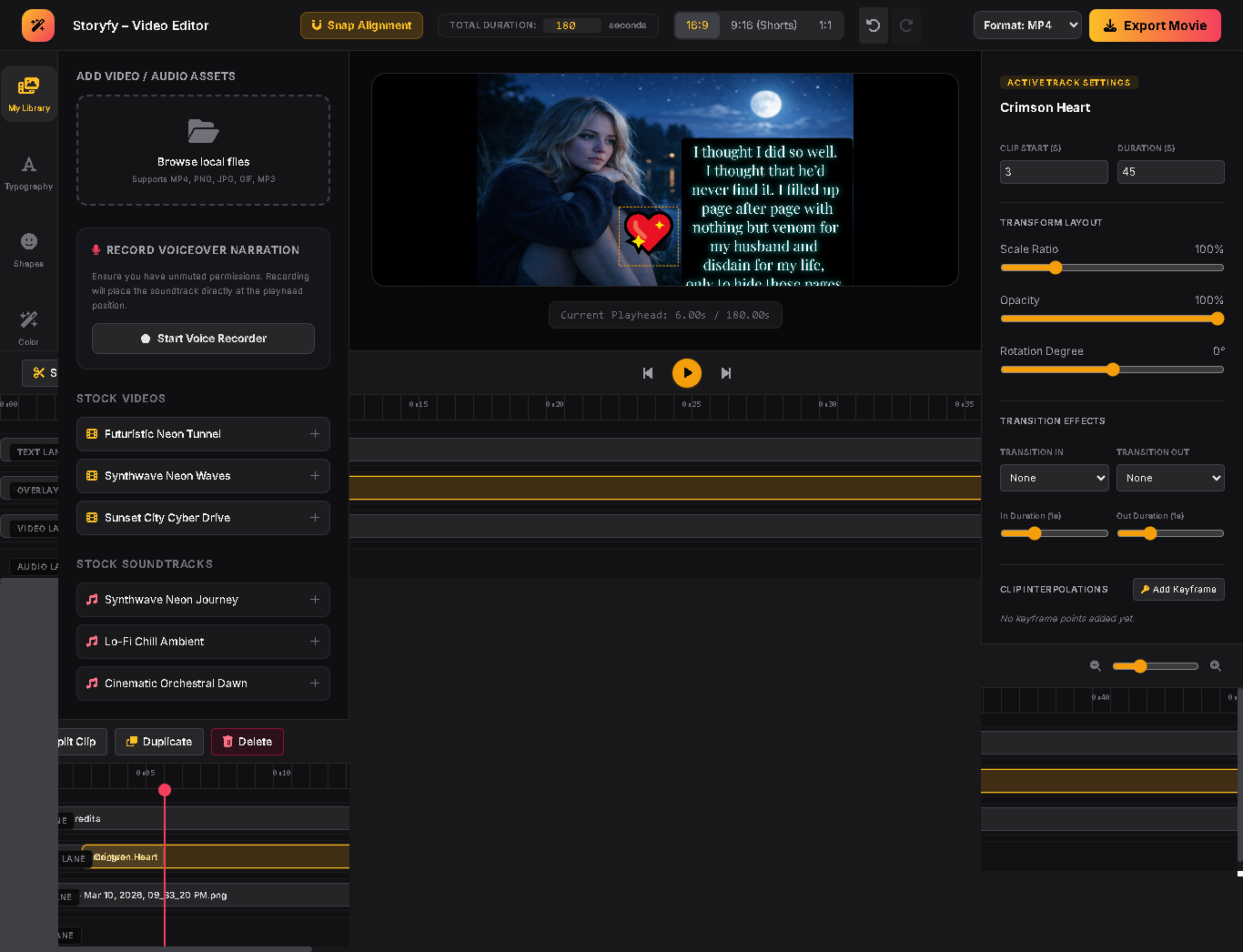
The complete non-linear online video editor. Trim clips, build custom multi-track layouts, orchestrate keyframe animations, and deploy complex filters directly inside your web browser.
Replace this space with a high-resolution screenshot mapping the layout structure (`storyfi-video-editor.html`).
Discover the core structural paradigms that separate Storyfy from common web wrappers.
Map absolute transformation matrix scales, fluid opacities, and exact XY alignments chronologically along custom track nodes.
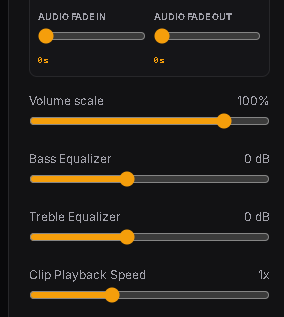
Shape acoustic properties with sub-audible precision. Inject low-shelf bass boosts and high-shelf treble enhancements on live tracks.
Instantly initialize color grading using core hardware filter rules: Cyberpunk Neons, Monochrome Noir, Analog Vintage, and cinematic glows.
Three quick procedural steps to generate real-time visual assets natively inside your viewport ecosystem.
Drop local MP4s, static imagery, animated GIFs, or ambient stock tunes directly onto your project grid canvas.
Slice files via playhead razor tools, customize text overlays with neon glows, or trigger transition blur timings.
Trigger hardware encoding streams to save your project context instantly into localized MP4 or WebM containers without tracking footprints.
Traditional editing options depend on clunky installers and high server monthly costs. Storyfy uses client-side canvas structures to protect your raw files while remaining completely free.
Got questions about technical limits and processing pipelines? We have answers.
No. Storyfy processes all data locally on your computer using browser API instances (`captureStream`, context arrays, and client blobs). Your videos never leave your local workspace, keeping your data secure.
When multiple keyframes are dropped onto your timeline lane tracking maps, our render script applies standard continuous interpolations across target properties like scale, layout position, and alpha opacity levels at each timestamp.
We support standard native universal video outputs including high-profile standalone MP4 configurations (H264/AAC audio mappings) and robust, optimized WebM (VP9/Opus audio) outputs.